Action Steps: How we get un-stuck in the creative process.
By Sandra Rea
I am asked frequently how I keep writing every day or how an author can get un-stuck when they hit a creative roadblock when writing. The answer might be a little simpler than you think. Just write SOMETHING, I tell them. In all honesty, I get stuck, too, sometimes. At that point, I turn to something else and write a little bit on that other piece, which helps to stimulate the creative process and always seems to help me when I've returned to the first piece I've been writing. But that is not the only tactic I use.
One surprising thing I recommend for a stuck writer is to get up from her computer and get out of her head for a bit. Take a shower or bath, read a book, sit outside in the sunshine, take a drive, get a couple of errands done or just put her feet up and relax. Watch a favorite show on TV. All of these activities seem counterintuitive to the creative process, but they aren't. In fact, while doing any of these things, a writer should keep a pen and notebook handy… especially when driving alone in the car. I get some of my BEST ideas during those drives.
Why does getting away from the computer help the brain be more creative? It needs rest, too. I'm blown away sometimes by how I can be sitting at the computer trying unproductively to come up with points for an article or trying to massage interview points into a business profile that is cohesive and makes sense only to find myself staring blankly at the screen, my fingers unwillingly to move. Then I get up and do something. Just for 30 minutes. I sit outside, water the lawn, plant some flowers, do laundry, clean the kitchen or run to the store. When I sit back down at the computer, my creative juices have been recharged and I get through the piece I am writing.
Okay, you say, that might be good for when you're writing short pieces, but what about my book? How can I get un-stuck when coming up against a wall when writing my book? With every wall, there is a way around the wall. You just have to find it.
First, a book is an ongoing process. It's mighty rare to hear that an author sat down and wrote an entire book in one sitting. I won't say that for short books this isn't possible, but it's improbable. Otherwise, wouldn't we all just do that? Second, writing a book starts with a plan, a story outline, character development, etc. A lot of writers type out their outlines and notes so they can refer to them when they get stuck in the writing process. Conversely, some very successful authors I know have a free-flow way of doing things. While they have their basic ideas about the plot, setting(s) and characters, they sort of just let the story happen over time. Sometimes they admit to being just as surprised as the reader is about twists and turns in the plots and the development of characters over the span of the manuscript. If you ask me, that's sort of like life. One never really knows what's around the next corner. Hopefully it will be exciting and memorable… and not too heart wrenching. However, there's plenty of heartache in life. It's all part of the grand story of our lives, right? Wouldn't life be a bit boring without some of those up's and down's?
When you are writing a book, you'll hit a few stuck points, especially when you have limited time every day in which to write it. The good news is that you live with your story in your head at all times. Your brain is working on the book even when you are not aware of it! When you sit down at the computer every day, read through your last few pages. That will help jog your creative mind toward taking the next steps. Then start typing. A lot of writing and being successful as a writer is in simply taking action. That's like everything in life if you think about it. Nothing will happen if you don't take action steps. As you've heard all your adult life, every journey begins with your first step. Baby steps, big steps and giant leaps. I guess what I'm saying is that if you want to have a finished manuscript, you need to keep taking action. Keep writing. Keep jotting down notes about your story and characters. Keep a notepad with you wherever you go, and keep one at your bedside. (I frequently wake with thoughts for a story that I want to remember, so I write the thoughts down.)
If you get stuck in your writing and none of the tactics I've presented help you, there's one more thing you can try. You can play a few creative mind games. Word games are great. And there are some interesting creativity-enhancing card-based programs available to you online that might help get your brain on track. For my money, however, a short drive does the trick!
This piece is meant to be motivational. I am sure you might have a few good ideas that might help other writers get un-stuck. If so, we welcome you to send them in to us at i This email address is being protected from spambots. You need JavaScript enabled to view it. . We can collect them and will credit you for the ideas we use!
Starting an Online Magazine vs. Contributing to Existing Publications: Which will be better for exposure and possibly even book sales?
By Sandra Rea
Recently an author announced to me that she was going to start an online magazine just for the sake of exposure for her not-yet-written book. I immediately asked WHY? Why in the world would she start and then have to manage a magazine in hopes of getting noticed vs. contributing articles and interviews to other people's magazines, blogs, websites and publications? In a vast sea of online everything around books and writing, there are almost unlimited opportunities to be seen. For my time investment I would rather seek out appropriate and fitting online publications, blogs and social media platforms to which I could contribute my information vs. starting a magazine, which might sound to some like an easy task with today's user-friendly software. They would be wrong.
Running a magazine, even if it doesn't run off of advertising dollars, is a challenge. Ask my friend Andrew who runs a wonderful online publication for divorced parents. Oddly enough, the title is Divorced Parents online digital magazine (. If you are divorced and have something to share with the rest of the class, and you have writing skills, Andrew might just use your contributions. I contribute to his publication from time to time. I do not sell my books in an obvious way there, but I do get to include my book titles in my bio. I do not get paid to write for this publication, but I like the message of the magazine, and I will always contribute when I have the time. I wrote a book on divorce, so this is a fitting publication to which I should contribute.
That's what I'm talking about here… contributing where it is fitting to what you have to say. But before you enter that realm, sit down with pen and paper. Answer the following questions before seeking to contribute to any publication (in no particular order):
If you ask yourself these questions and decide that you want to gain exposure through contributing to various publications, you will likely receive no pay for your efforts, but that's okay. The exposure is pay enough if the publication allows you a little blip of a bio at the end. Do the editor and publisher a favor. Proofread your articles before submitting. Yes, the editor will catch things, but give them a leg up and cut back on the typos. I am sometimes bad at the final proofing, so I hired a third party to proof longer works for me.
As for WHERE you should contribute… that is up to you. Do your homework. You should at least be familiar with the publications, blogs and posting arenas. That way you will know the style of writing the editors want. I write in a friendly, forward manner, so my style wouldn't fit well with a higher-level academic publication. I already figured this part out. I only contribute where it makes most sense and usually in response at this point in my life and career to an invitation.
If you have questions or feedback about this or any piece you see in our VAULT, please email us at This email address is being protected from spambots. You need JavaScript enabled to view it. . We would love to hear from you.
Rising above the CHATTER: How do you do it?
By Sandra Rea, author of And Then My Lawyer Died…
Facebook, Twitter, LinkedIn, Pinterest, Google +1, GoodReads, RedRoom, Reddit and the list goes on and on. Can you imagine if you could actually hear all the voices posting about their books or talking about promotions or their lives or whatever? It would be an amazing amount of chatter and noise. With that in your mind's eye, how do you get heard?
It seems there is an endless list of social media sites on which an author can open a page to have a presence and new ones keep popping up. (I get invited to social media sites I never knew existed, and I've stopped joining. Enough is enough!) Then there are the social groups within the sites and all those blogs! Does it ever end? The short answer is NO, but you have control on how many sites you're on and what you do there to promote your work.
To promote your book, you have to be on social media, participate (notice I didn't say simply "join") in groups online and it wouldn't hurt to write a blog if you keep it current and fresh and add in lots of key words to lead readers to your book(s). The secret to making it all work is consistency. That's where a lot of people – myself included at times – fall down on the job. I talk to authors who tell me they have a presence online and when I check 'em out I see that they are indeed there, but they don't really keep things up. Hey, I get it. That's a lot to keep writing and posting and connecting and crossing ties when you also want to write your next book or do your paid job during the day or raise a family. You get 24 hours in a day and you have to decide how to spend those hours. That said it would be wise to devote an hour a day to your book promotions online. Just one hour can make all the difference in the world.
How do I know?
Whenever I spend consistent time online… even on just three pages in social media without any other effort or time spent… I see a little spike in sales of my e-books. Same goes for authors I assist online. They talk about their book in the RIGHT WAYS and they report seeing a bit more in sales. Beyond that, they get invited to guest blog, have a book signing in the real world and get new friends with similar interests who might just be interested enough to one day buy their book. The next thing that happens is that my authors start seeing reviews from readers on Amazon. That's cool and it makes me happy to see that when it happens. It's all a process. And it's something authors can't just put in place and walk away from if they expect results.
What's the process?
- Choose a handful of social media sites that work best for you. I've been doing social media as an author and for authors since the days when MySpace ruled. That was once a great place to be for authors, but then people started using it as a great big bulletin board and it was redundant and boring. There was no true engagement. Then the way the system worked changed, Facebook became the "it" place to be and the rest is history. Facebook then was a great place for authors to be and there was great freedom to have open and widely shared discussions, and all was good… for a while. Now Facebook is a tough place to be for anyone selling anything. Discussions are controlled by the Great OZ behind the screen of the computer screen. Facebook decides who sees your posts based on your activity. And they want you to advertise. We all kicked rocks and grumbled when Facebook started pushing the paid advertising path, but eventually we had to go with their program. However, there is a way to do that without spending much money at all, and you can target with precision. That comes to you in a later piece. Stay tuned.
Twitter grew stronger and is a pretty good place to be, but you must participate fully for the best results. LinkedIn is my current favorite social media site, because it still functions as a social media site should. It used to be more restrictive, but they loosened up and made it easier to connect there. Smart LinkedIn!! And there is GoodReads, which I can endorse, and a few others that are worthy of authors, because they connect readers to writers, which is the point, isn't it? The actual point to this article is that you only have so much time in a day, so choose no more than five social media sites and work 'em! - WORK YOUR SOCIAL MEDIA SITES!! That's right. You can't just open pages and have them automatically do their thing. You want friends? Seek them, but be careful, because too much activity is viewed as spamming by the system on Facebook. Other systems, too. Accept friendship from all who apply. My rule is to accept all, but if they act up or start doing stupid things or posting inappropriate messages on my timeline or pages, they are gone. A delete button is a wonderful thing.
Aside from friending, you must ENGAGE people. I talk about this in other articles, because I cannot stress enough that if you don't care about your friends, if you simply post and post and post, telling people to buy your book, buy your book, it's not going to work for you. Get interested in other people and what they are doing. Repost, retweet, share other people's information. Do unto others as you would want them to do unto (or for) you. Be approachable, funny, witty, intelligent, something that shows you are a real human being with goals and a life. Don't only talk about your book or your writing life. Share pictures of your interests. Get involved in other people's conversations. And when it's appropriate, you can slip in that "that's why I wrote" INSERT BOOK TITLE AND LINK HERE. You are waiting for that wonderful question: "Oh, you're a writer? What did you write?" Yay!
Invite other authors to share about their work. Try to get discussions going. Interact with others. It's called networking. In the real world, we gather, get to know each other, shake hands, exchange business cards and information and help each other. Online in social media, we use our words to help one another. It is SOCIAL media. So be social. - Join and PARTICIPATE in social media groups. You can also start a group if you are so inclined and can actually lead it. You can join lots and lots of groups, but the secret is participation. I admit that I am guilty of joining a few groups that are very interesting around writing and publishing. However, in reality I don't have the time to be very involved. I am guilty of non-participation. Yet, my involvement alone has done good things. For example, there are amazing groups for writers on LinkedIn. I've joined and participated a bit here and there. As a result, I have a large influx of new links and all sorts of people are endorsing me. Thank you to all who do that! YOU are fabulous.
- Start a blog and keep posting. I don't know what the statistics are around blogs and blogging, but I'll guess there are millions of blogs. It's not the fact that you have a blog that means much. It's the content, the key words, the following you build and how you lead people to see your blog in a virtual ocean of blogs and bloggers. I know some authors who have amazing blogs and yet no one knows of them because there are no back links, no banner ad links, no guest posts, no real sharing of any kind going on. They are blogging to blog, but yet they have books to sell. Good books and zero sales. I'll share an article with you about blogging to teach you how to do it. A friend has a wonderful webinar on the topic, and he covers every aspect and then sends out a full piece on it. Soon, I will include the link in the VAULT so you too can learn exactly what you need to do. This guy is an Internet guru, and I don't use that term lightly. There aren't many out in the world that I would give that title to, but this guy… well, he's special.
- Devote an hour a day to your promotions efforts. Seriously, just an hour to post and write and share. If possible, link your social media sites, so you don't have to hit "post" more than once or twice. In fact, check out hootsuite. That's a paid social media site-sharing mechanism that will cost you maybe $20 a month, but it sure makes your posting life easier! You can even schedule posts out far into the future. It's pretty cool. We have nothing to do with that company, but as you will get to know, if we like something and think it's useful for authors, we'll share it with you. None of the things we share will cost much either. We know you might not have a large budget for promotions. That's why you're reading this article perhaps, or because you know you have to do a lot of this work yourself.
For now, this is enough. Go to your social media sites, work them, send me a personal friend request, link with me, pin me, follow me, TALK TO ME, and feel free to post about your book(s) on any of my pages. Be sure to like our company page on Facebook and follow us on Twitter. There are links on our site when you exit the VAULT today!!
FIVE THINGS TO UNDERSTAND ABOUT BOOK PRINTING
By Penny Callmeyer, Tiger Lilly Ent./Color House Graphics.
#1 - BEFORE GOING TO PRESS
You've finally written your first book, now what? Please make sure that you find an editor, book and cover designer that "specialize" in working with books. Be certain to interview them, get samples of their work and talk to their references before making your choice. Ensure that they are willing to "communicate" with your printer of choice, to make sure that the files (see #3 below) are prepared to the printer's guidelines. (File preparation instructions should be found on your printer's website). Experienced book & cover designers should understand that some design features can be very expensive (make sure they are aware of your budget) or a manufacturing nightmare. An enticing book cover will typically generate 85% of the sales of the book, so the front, back and spine should be equally interesting.
#2 – REQUEST FOR PRINTING QUOTATION
If your have been told to send an RFQ to 20 printers, you are wasting your time and will be more confused than you ever dreamed. It is recommended that you narrow the number of printers down to 3-5. Understand that printers have many different types of presses and each of those presses is designed for certain trim sizes and run lengths. Choose the right printer/equipment/specifications for your project; below is a quick guide to the types of decisions you will need to make.
Printing type:
- Digital printing is designed for runs of 1-1000 copies depending on the page count. Digital equipment is either roll stock or sheets, when a roll is used, the speed of printing is faster (this is okay for longer runs, text only, not so hot for quality). Also, if you have halftones, roll printing is not recommended if you expect high quality reproduction. Ink jet printing is being used more as they improve the process and it also allows for variable data. As the years are going by, digital printing is getting better and better, in some cases (such as book covers) is becoming better than some types of offset printing. Again, although covers are being printed digitally more often, the text is still only cost efficient on runs under 1000 copies. Or if there is a large page count, that might max out at 600 books.
- Offset: The three types of printing are Non-heat set (roll), heat set (roll), highest quality Sheetfed; see below for a discussion of each type.
- PROS: Efficient pricing for runs over 1000
- CONS: Ink is wet when sigs are folded, some offsetting may occur (ink on the facing page) and ink may appear slightly grey, however the quality is acceptable.
- PROS: Efficient pricing for runs over 1000. Ink density of black is good, providing a sharper/crisper image (photo) and type.
- CONS: When ink is introduced to paper, moisture goes into the paper causing it to expand. When the paper proceeds through the dryer, the moisture is removed which causes to paper to contract. This process can sometimes create what is called "web growth". That means that if, after the book has been trimmed, it is exposed to moisture, the paper can once again expand leaving the text exposed slightly beyond the cover. We don't live in a high humidity area; however, you have to consider where the book is being printed. Does the climate there tend to be humid, did the delivery truck pass thru any areas where it was raining, etc. This is not a huge concern, however I believe it is important for you to understand the possibility of web growth.
- PROS: Control of ink density, color matches, high quality photo reproduction.
- CONS: Cost efficient for runs over quantities of 500 (depending on page count). Prices tend to be higher for this method of printing, however, if you shop carefully, some printers are able to print at prices comparable to web. This is the first choice for coffee table books.
- Non-heat set, web: Ink is applied to paper, perfs and folds down into signatures.
- Heat set, web: Ink is applied to paper, paper goes through a dryer, then it perfs and folds down into signatures.
- Sheetfed: Highest quality of printing. (Most covers are printed by this method).
PAPER: Printers have different "house" stocks, so ask for a recommendation, which can save you money. You should check paper weights, opacity and bulk (PPI), etc. Note that if you choose a special order stock, there may be a lead time of 2 or more weeks. If you choose a special order stock, please make sure to sign your quote and get it to the printer prior to submitting your files in order to keep your schedule on track. Quotes are normally good for 30 days only to allow for changes in paper pricing.
BINDING: Standard bindings are saddle stitch, perfect bound and case bound. (case bound: round back, flat back, adhesive or smythe sewn, this method of binding as well as optional bindings will require additional manufacturing time)
Optional: Wire-O, Spiral Wire, Plasti-coil, Otabind, Semi-concealed Wire-O, etc. (optional bindings can be quite expensive)(Prices for embossing and foil stamping are based on the image area).
COATINGS: Varnish, Aqueous, UV and lay flat film lamination.
- Ask your printer for recommendation on choices that fit your budget. Every time you consider a binding choice, ask yourself: "is this binding going to realistically affect the sale of my book or am I cutting in to my profit margin?" Sometimes it is better to start out basic and improve the features of your design when the book has proven saleable and you have the additional dollars in your budget. Remember, you should be working with design professionals while preparing your book; it is not the printer's job to make design recommendations after the files have been submitted.
This is a brief overview of the printing process, so please:
- Ask for more details from your printing professional.
- Ask about their best trim sizes and run lengths.
- Ask if you can request reprint pricing on your original RFQ.
- Ask if they are printing in 16 or 32 page signatures (some presses do run 24 and 48 page sigs). Best rule of thumb, design your book to be equally divisible by 16, again, please talk to the printer before sending an RFQ to make sure they are a good fit for your project. Choosing a printer should never be based on pricing alone; consider the level of customer service you will receive, are they known for good quality, meeting deadlines, good customer interaction, willingness to make suggestions to save you money and are they giving you the same treatment that their large Publishers are receiving.
#3 - SUBMITTING FILES FOR PRINTING
Whether you have prepared your files or have hired someone else to do that for you, make sure that the file preparation guidelines and check lists have been followed.
- Ask your printer if you can submit test files for pre-flight to determine if the files will be trouble-free. If this is your first project or if you are working with a new designer, I strongly suggest that you have excellent "communication" with your printer prior to pre-flight or uploading files.
#4 – PROOFS
Depending on the printing method you have chosen, typically proofs will be sent to you in 2-7 days from file submission. PDF or "soft" proofs are being used more often unless you request a hard copy proof. The days of the "blue line" and "color key" proofs are long gone. If you receive either a digital or hard copy proof, know that they are being generated digitally. So if your book is being printed offset, a digital proof will not be a match for what you will get off of an offset press. Toner, Ink jet and Ink are all different processes. If you are printing digitally, your hard proof will be an exact match.
- Ask your printer when to expect them. Printers normally base their schedules on a 24 hour turnaround of proofs.
- Ask how much time has been allotted for proofing.
- Ask what the printer will charge for changes made at the proofing stage. You should have done your final proofreading "prior" to proofing so as not to incur any additional charges.
- Check to make sure that the pages are in the right order, the margins are positioned properly, graphics have not dropped out, photographs or line drawings are clear, etc.
- Keep this schedule tight if you have concerns about your delivery date.
#5 – UNREALISTIC EXPECTATIONS
Assuming you have done your homework and have chosen the best printer and printing method for your project, expectations should not be a problem. Please remember that book manufacturing is just that, manufacturing. Manufacturing = machines and people. There is no such thing as perfection with that combination. Choose to work with people that specialize in the manufacturing of books. Legitimate Book Manufacturers are capable of turning out a fine book. Yes, sometimes problems occur and both sides need to be willing to compromise to work out a fair and reasonable solution.
SUMMARY:
You have by now noticed that the words "COMMUNICATE & ASK" are shown in BOLD TYPE. That is because those two instructions are the most important ingredient in a successful publication. Do not operate on blind faith. The more you educate yourself, the more questions you ask, the more professionals you talk to, the better choices you will make. Creating your first book might seem overwhelming. Talk to every expert you can find, ask all of the questions you can think of and then some, and join your local Publishers Association. Let the experience of the members of the Assn. help you to make this an exciting and profitable adventure!!!
© Copyright 2026 Penny Callmeyer, All rights reserved.
Does Social Media Help you SELL Books?
By Sandra Rea
I hear it all the time… "I keep telling people about my book online and I'm not selling any books!"
If this is you, there's a reason you aren't selling books. You are not ENGAGING your audience! Before your feathers get ruffled, hear me out. There are ways to get people interested in what you are doing and there are ways to repel your "friends" and "followers." If you want to repel them and possibly even have them unfriend you or stop following you on social media, keep hitting them up with bulletin-board-type posts about "buy my book." No one cares. Why should they when you don't care to learn anything about them? That's where engagement comes into play.
These are but five good tips. We will give you more later. Master these and let us know if your book sales and online popularity improve!!
Writing a book can be very good for business
Are you a busy executive, a business coach, life coach, business owner that serves a niche or a medical professional who has a lot of information in your head that would help general consumers, people in your industry, business owners and executives? Do you have an idea for a book that would help you reach your marketing objective? For example, you have climbed to the top of your profession and want to mentor those starting out in your business, passing on information that you wish you had known early on in your career? Or maybe you work with medical patients, providing them with a much-needed service or product. Sharing your story with them helps them and your business at the same time.
Would the book be a great gift to your new clients or customers? Would it help spread the word about your business, products and/or services? If you own a franchise, is the book something that could help you expand more easily, and could be something you would include in the buy-in and ongoing marketing for each and every one of your franchisees? (For example, they may have to buy a certain number of these books to give to their clients/customers.)
Truth is that a book can help boost your business in a lot of ways. Once you understand the objective with the book, you need to find the right story to share and hire a good ghostwriter to help you complete the book. If you are a decent writer and have a clear outline of what you want the book to achieve, you can write it yourself. However, if you are busy running your company, it's often best to have someone else write it. The review and editing process will eat enough time as the book comes together. You will be plenty involved. Your opinion matters. Your input in needed.
If you are stubborn and like to burn the midnight oil, you can write your book, but for Heaven's sake, be wise and hire a professional editor and a separate proofreader (or ask the editor to find a proofreader). Why you want the proofreader is because we all make mistakes. Even the best editors can miss things. The time to find those typos is before the book goes to the printer.
Printing costs can be high, dependent upon the number of pages, the type of cover, the colors used in the book, the paper stock and so on. You will also need a good designer. We offer all the services you need and will walk you through the self-publishing maze. In short, there are two ways to self-publish. Do you know what they are?
You also need the book to be in downloadable e-book format. There are a variety of ways to self-publish an e-book. In fact, doing so takes little time. Smashwords is an excellent resource for online publishing, and you can't beat the price. It is free to publish, but you need the book in the right format. Smashwords gives you a wonderful tutorial. At the time of writing this, Smashwords does not support Amazon's Kindle. They are working on it, and they do support Barnes & Noble's Nook. Smashwords also supports other platforms. For Kindle, go directly to Amazon and publish through the Amazon system. Again, the price is zero, and your book needs to be in the right format. The system tutors you on what to do. You want your book downloadable from your website and any social media pages you have, too. Otherwise, it's not a very good marketing device. Rather you aren't getting all you can from it as a marketing device. We can guide your in self-publishing your e-boor or do it for you for a fee (dependent upon the type and size of your book).
Gather stories from clients, customers, other professionals in your field, people in your company and your own personal stories to help support what you say in your book. Nothing works better as a marketing device than strong testimonials. In this case long testimonials or shared tales of the effectiveness of your strategies. Testimonials in brief are wonderful mechanisms for your website and social media pages, too. Use them as graphic components. It is advisable not to have a separate testimonials page. That can be irritating to site visitors. For your website, try getting video testimonials.
This is just a taste of what you might do to expand your company's brand. The purpose is to get your brain percolating a little bit more about a book you might write or have written by a ghost that will help you in your professional marketing goals. There are nontraditional means by which to market, and a book can be part of that effort. Ask us how!
The Truth
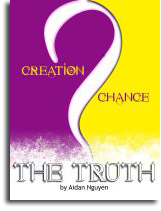 We tend to think that only the well educated or those with celebrity status in our global culture can come up with the answers to the truths we seek. But sometimes it is an average individual who puts his/her thoughts to paper after a lifetime of exploration who comes up with the answers. Sometimes it's a simple carpenter who creates change more than 2,000 years ago… and sometimes it's a simple man from Viet Nam who wants us to know we can make change together… you and me.
Purchase this title today!
Search Articles
COPYRIGHT DISCLAIMER: All content contained on this website is copyrighted. Not that we should have to tell you this, but all content written by any member of Full Circle Media & Author Promotions is ours and cannot be re-purposed by readers without express permission from us. The articles and information provided herein are intended to educate and to guide authors in making good decisions in their book promotions efforts. If you want to reprint or otherwise use our information, contact us first. Articles contributed by other industry insiders may not be used without their express permission. There is no grey area on this point.